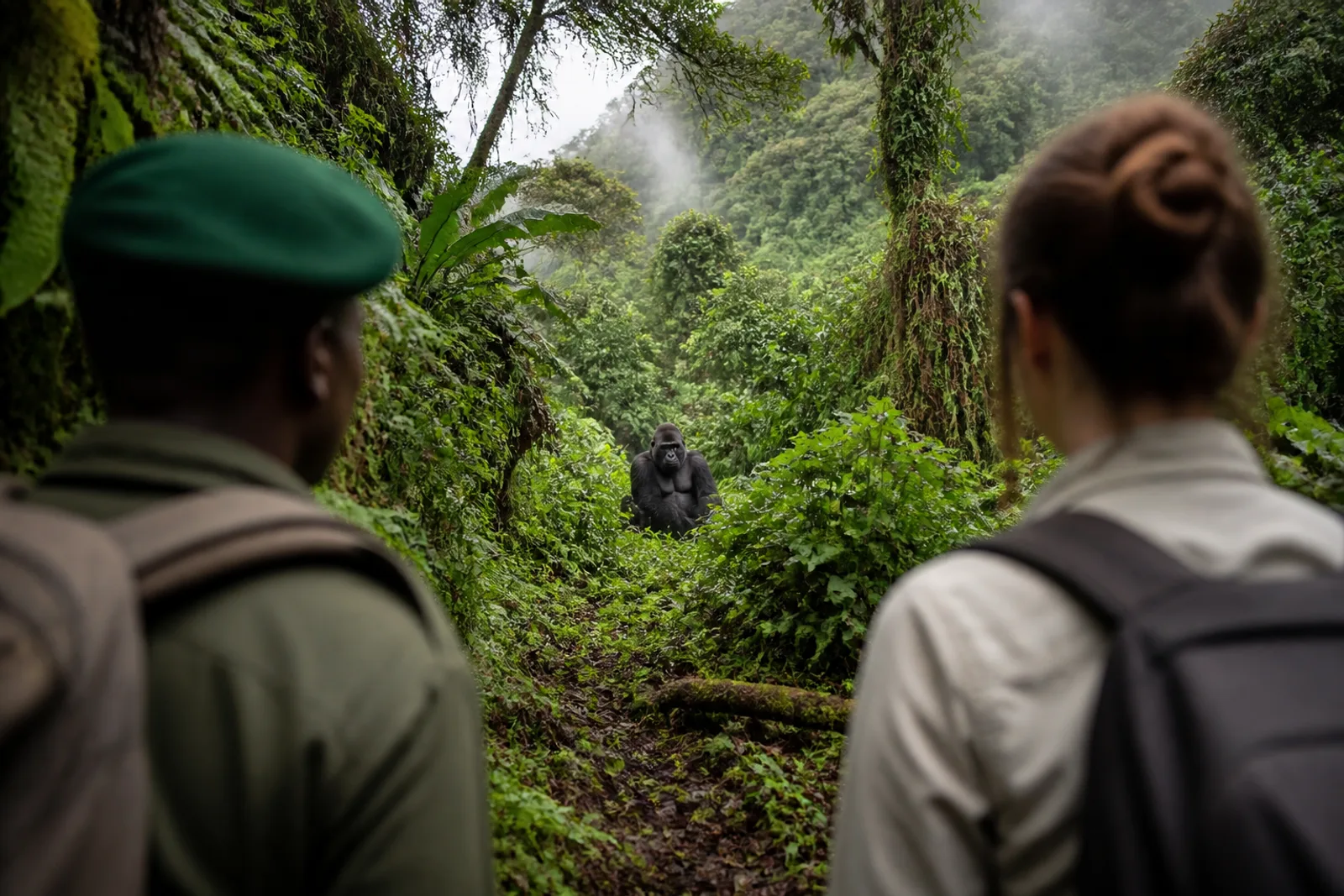
This combination works best with at least twelve nights and one deliberate buffer day. This guide is for travelers combining signature experiences. It explains gorilla permits, Entebbe or Kigali flights, trekking rules, age limits, fitness, luggage and recovery in practical terms, so you can make a confident decision rather than stitch together advice from unrelated trips.
The short answer: Link Kenya with Uganda or Rwanda using realistic flight days, permit planning, fitness expectations, and a sensible trip length. Start by fixing your available nights and comfortable total budget. Then choose the wildlife area and travel rhythm. A named lodge should come later, because an attractive room in the wrong location can cost you the best hours of every day.
Kenya Safari and Gorilla Trekking: the decision that matters most
Safari planning becomes easier when you separate outcomes from ingredients. The outcome might be quiet predator sightings, a relaxed family pace, excellent photographs, a river-crossing possibility, or a smooth beach finish. The ingredients are nights, geography, access rules, guide quality, transport, and season. Marketing often starts with the ingredients that photograph well. Good planning starts with the outcome.
Write down three priorities and rank them. If everything is equally important, a quote will grow longer and more expensive without becoming more coherent. For most travelers, the strongest plan includes one flagship experience, one contrasting landscape, and enough unprogrammed time to absorb both.
- Gorilla permits: ask how this changes the route, price, comfort, or quality of wildlife time rather than treating it as a decorative detail.
- Entebbe or Kigali flights: ask how this changes the route, price, comfort, or quality of wildlife time rather than treating it as a decorative detail.
- Trekking rules: ask how this changes the route, price, comfort, or quality of wildlife time rather than treating it as a decorative detail.
- Age limits: ask how this changes the route, price, comfort, or quality of wildlife time rather than treating it as a decorative detail.
- Fitness: ask how this changes the route, price, comfort, or quality of wildlife time rather than treating it as a decorative detail.
- Luggage and recovery: ask how this changes the route, price, comfort, or quality of wildlife time rather than treating it as a decorative detail.
How to evaluate the main options
Use the same questions for every option: How much usable wildlife time does it create? How predictable is the logistics plan? What happens if weather or animal movement changes? Which costs are included? What control do you have over departure times and the length of sightings? These questions expose differences that star ratings and “luxury” labels cannot.
Location deserves special attention. Two camps with similar prices may deliver very different days if one sits close to the habitat you want and the other requires a long access drive. On a seven-night trip, saving forty-five minutes each way can return the equivalent of an extra game drive.
Ask for the actual property, room category, park or conservancy, vehicle arrangement, and transfer method in writing. “Similar” accommodation is not specific enough for a large international purchase. If a substitution is necessary, the contract should explain the standard and approval process.
Timing, seasons, and honest expectations
East Africa is rewarding throughout the year, but the experience changes. The drier periods generally concentrate animals near dependable water and make vegetation easier to see through. Wetter months can deliver green landscapes, dramatic skies, migratory birds, newborn animals, fewer vehicles, and lower rates. Rain is commonly episodic rather than a full day of continuous weather, although road conditions can affect timing.
Wildlife remains wild. Migration herds respond to rainfall and fresh grass; mountain views depend on cloud; predators may rest for hours; flights can be adjusted for weather. A credible planner discusses probabilities and backup value instead of guaranteeing a specific encounter. Build at least two or three nights into the wildlife area most important to you.
U.S. school breaks and holiday weeks can tighten flight and family-room availability well before camps are technically full. If dates are fixed, begin earlier. If dates are flexible, ask the operator to compare two windows on experience and total cost, not weather alone.
What the price should include
Safari quotes are only comparable after they use the same assumptions. Confirm whether the total includes park and conservancy fees, airport transfers, domestic flights, road transport, exclusive or shared vehicles, meals, drinks, laundry, activities, taxes, and emergency evacuation membership. International airfare, visas, travel insurance, premium drinks, tips, and optional activities are frequently separate.
Park fees can be a meaningful daily cost and may change after a quote is issued. Ask whether they are locked, estimated, or payable directly. Also confirm the currency and card or bank charges. A low deposit can feel attractive, but cancellation dates and supplier terms matter more than the percentage alone.
Spend where it changes access or time: a well-located camp, an excellent guide, a private vehicle for specialist interests, or a flight that removes a punishing transfer. Save on decorative room size, unnecessary one-night stops, and premium services you will not use.
A practical planning framework
- Define the trip: record dates, traveler ages, mobility needs, room setup, and the international airport you expect to use.
- Rank three outcomes: wildlife, photography, privacy, culture, beach, value, or family ease.
- Protect minimum stays: favor two- and three-night blocks over a chain of single nights.
- Compare access: price road and air alternatives with door-to-door time, baggage rules, and fatigue.
- Itemize the quote: align inclusions and exclusions before comparing totals.
- Check the operator: verify legal identity, payment recipient, reviews, emergency contact, and cancellation language.
- Insure promptly: purchase suitable coverage after the first nonrefundable payment and disclose relevant conditions.
This sequence prevents the most common mistake: choosing a beautiful property first and forcing an inefficient itinerary around it. You can browse Kenya safari routes, compare destinations, or build a custom itinerary once your priorities are clear.
Sample day and travel rhythm
A typical safari day starts before sunrise with a warm drink and a game drive during cool, active hours. You may return for a late breakfast and rest through the hottest part of the day, then leave again in midafternoon as the light softens. Conservancies may add walking, night drives, or off-road viewing where rules permit. National parks and reserves apply their own opening times and vehicle rules.
Not every day needs two long drives. Families may prefer a shorter morning, pool time, and a focused afternoon. Photographers may stay with one subject and skip a scheduled meal. Honeymooners may value a private breakfast or unhurried evening. The best guide reads the guests and the landscape rather than performing an identical routine.
Transfer days should be labeled honestly. A route that looks short on a map can include rough roads, gate formalities, airstrip waiting, and multiple aircraft stops. Ask for approximate door-to-door time and the plan for lunch, luggage, and delays.
Health, safety, and responsible travel
Discuss vaccines, malaria prevention, prescriptions, and personal health circumstances with a qualified travel-health professional. Requirements depend on itinerary and travel history, and official guidance changes. Carry medication in original packaging in hand luggage, plus copies of prescriptions and insurance contacts.
On safari, follow the guide's instructions. Remain seated when asked, keep voices low near animals, never feed wildlife, and do not pressure a driver to block an animal or crowd a sighting. Lodges in unfenced areas normally escort guests after dark. These rules protect visitors, staff, and animals.
Responsible choices also improve the experience. Favor properties that can explain land tenure, local employment, guide development, waste and water management, and conservation contributions. Cultural visits should be consensual, fairly compensated, and small enough for genuine interaction.
Common mistakes to avoid
- Too many stops: every move consumes prime morning or afternoon hours.
- Comparing totals only: a cheaper quote may omit fees, flights, drinks, or a private vehicle.
- Guaranteeing nature: build a high-quality overall experience instead of betting the trip on one sighting.
- Ignoring location: check the exact reserve, conservancy, gate, and airstrip.
- Overpacking: small safari aircraft often use stricter weight and soft-bag rules than international airlines.
- Skipping recovery: protect the first night after a long U.S. journey and avoid an ambitious drive immediately after landing.
- Booking without terms: understand deposits, cancellation dates, substitutions, and who holds the money.
How to improve value without cheapening the trip
Move the dates before removing the defining experience. A shoulder-season departure can preserve guiding and location while reducing room cost. Next, reduce the number of one-night stops and expensive transfers. A slower route often feels more luxurious and costs less.
Travel with four to six compatible people to share a private vehicle, or join a small scheduled departure if dates and interests align. Ask about resident or regional flights only when eligibility is clear. Never assume a promotion is valuable until mandatory fees and room-category differences are included.
Finally, give the planner a real budget range. “Best possible price” invites mismatched proposals. A range lets an expert show what each additional dollar changes: access, privacy, flight time, guide exclusivity, or room standard.
Before you pay a deposit
Ask the operator to walk through the itinerary as a clock, not just a list of places. What time will you leave, how long is the transfer under normal conditions, when do you reach the gate, and which meal or wildlife session could be affected? This simple exercise reveals overambitious routing. It also helps families, photographers, and travelers managing medication decide whether the daily rhythm is realistic.
Confirm the legal business name and that the beneficiary on any bank instruction matches it. Be cautious when payment details change suddenly or arrive only through a messaging app. Verify changed instructions using a known phone number or email address. Credit-card protections, transfer fees, and currency conversion vary, so compare the final landed cost and retain receipts.
Read cancellation terms in calendar dates. Understand when the deposit, balance, park fees, flights, and special permits become nonrefundable. Ask what happens if a camp closes, an airline changes its schedule, a border requirement changes, or you must postpone. The answer may involve supplier credit rather than cash, and insurance terms may treat those outcomes differently.
Preparing from the United States
Most East Africa journeys involve an overnight long-haul flight and a substantial time change. Keep the arrival day simple. A supported airport transfer and a comfortable first night are usually better value than connecting directly into a long road journey while tired. Reconfirm whether the domestic flight leaves from the international airport or Nairobi's separate Wilson Airport and allow a realistic transfer buffer.
Check passport validity, blank-page expectations, visa or electronic travel authorization rules, and vaccination documentation against official sources for every country in the route and every transit point. Do this again shortly before departure because rules can change after booking. Names on tickets and permits should match the passport exactly.
Notify banks of travel if required, but do not rely on one card. Carry a modest amount of clean U.S. dollar notes in denominations suitable for tips and small expenses, stored separately. Ask the planner which costs can be paid by card and where cash machines are dependable. Download insurance documents, the final itinerary, emergency contacts, passport copies, and key medical information for offline access.
For communications, ask whether camps have Wi-Fi, mobile coverage, charging hours, and the correct plug type. Connectivity can be limited by design or geography. Give family at home the operator's emergency number rather than promising constant personal updates.
Questions that make a good proposal better
- Why this order? The planner should explain geography, seasonal logic, and what each stop adds.
- What would you remove first? This identifies the least essential cost or the weakest one-night stop.
- Which guide and vehicle arrangement applies? Clarify private versus shared use and whether the same guide travels with you.
- Where are the hidden time costs? Discuss gate drives, airstrip loops, border crossings, and hotel-airport transfers.
- What changes in poor weather? Understand alternate activities, road access, and flight support.
- How is local impact measured? Look for specific employment, lease, conservation, or community mechanisms.
A strong planner welcomes these questions. The goal is not to make the trip complicated; it is to settle complexity before departure so the experience itself feels easy.
Once you are on safari
Share preferences early with the guide. Say whether you love birds, want patient photography, prefer a broad overview, need frequent breaks, or would rather avoid crowded sightings. A guide cannot personalize an unspoken wish. At the same time, leave room for local judgment: tracks, alarm calls, weather, and recent sightings may make a different plan more rewarding.
Keep expectations broad enough for discovery. The quiet hour watching elephants communicate, learning why vultures matter, or following fresh tracks can become more memorable than racing between the Big Five. Quality is often measured in time with a subject and what the guide helps you notice, not the number of species checked off.
Review the next day each evening. Confirm departure time, clothing, meals, luggage, special activities, and any payment due. Small corrections are easy before bags are loaded. If a service differs materially from the confirmed plan, raise it locally and politely so the team has a chance to fix it.
Frequently Asked Questions
How far ahead should I plan?
For fixed U.S. holiday dates, family rooms, or peak migration months, nine to fifteen months is sensible. Flexible couples traveling in quieter periods may find good choices closer to departure, but international airfare and preferred camps still reward early decisions.
How many nights should I spend in one safari area?
Three nights is a strong default because it normally creates at least four meaningful drive windows. Two nights can work on a broader route. One night is rarely worthwhile unless it solves a transport need.
Should I fly or drive between parks?
Fly when it returns a full wildlife session or avoids a very long, rough transfer. Drive when the landscape and stops add value, the party can share the vehicle cost, or baggage flexibility matters.
Are animal sightings guaranteed?
No ethical operator guarantees a particular wild animal or migration event. Experienced guides, enough nights, suitable habitat, and flexible drive timing improve the odds while keeping wildlife welfare first.
Do I need travel insurance?
Comprehensive insurance is strongly recommended for a costly, remote trip. Review medical care, evacuation, trip interruption, supplier failure, baggage, and activity exclusions, then confirm how preexisting conditions are handled.
What should I ask for in the final itinerary?
Request named accommodations and room types, meal basis, every transfer, vehicle sharing, included activities, park access, baggage limits, itemized exclusions, payment schedule, cancellation terms, and local emergency contacts.
Final planning advice
Link Kenya with Uganda or Rwanda using realistic flight days, permit planning, fitness expectations, and a sensible trip length. Keep the trip legible: a few strong places, enough time in each, transparent costs, and a planner who can explain every choice. That foundation matters more than collecting famous names.
Moran Trails can turn your dates, budget, interests, and preferred pace into an itemized proposal. Start with the decision this guide helped clarify, then ask the team to show two options and explain the tradeoff between them.