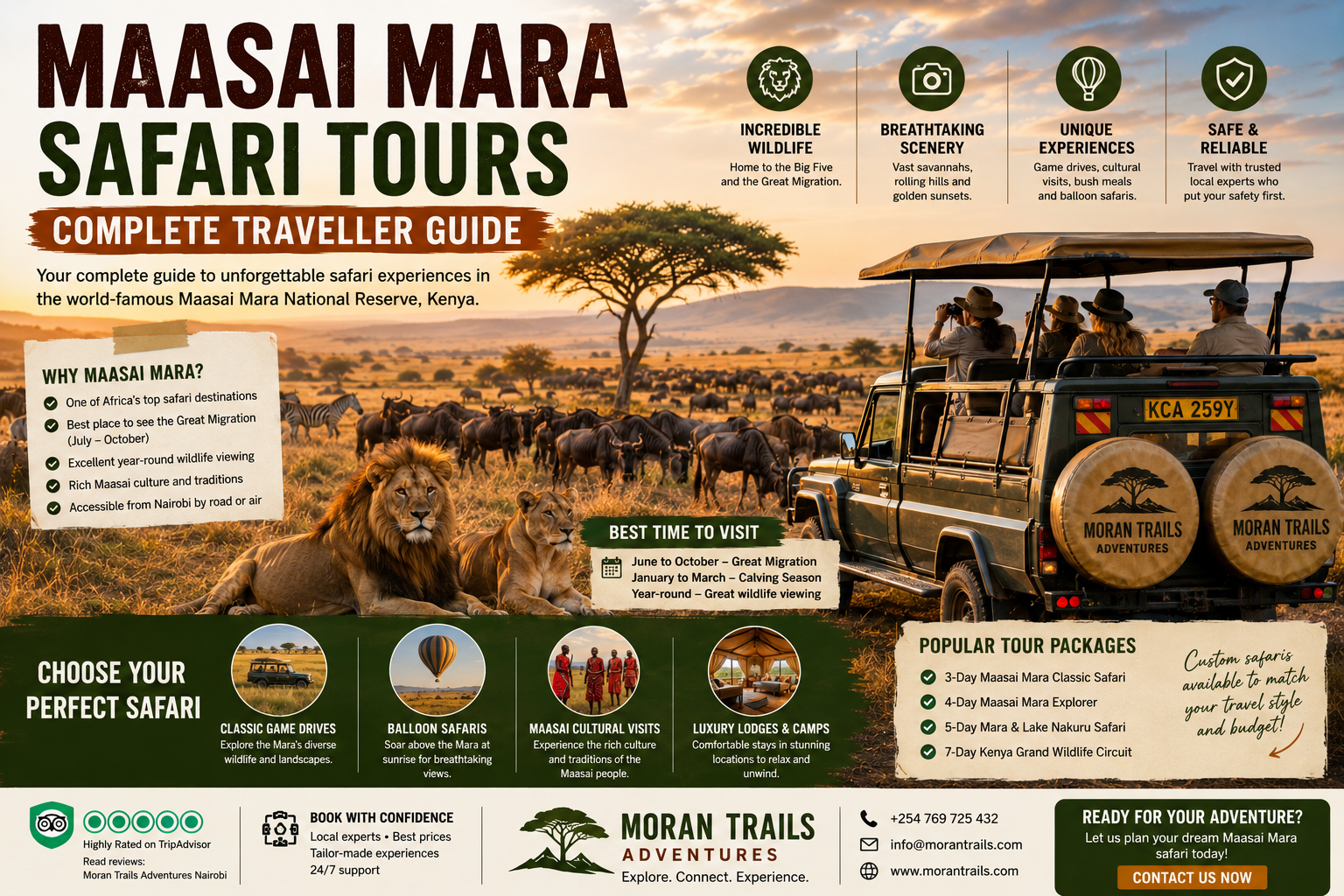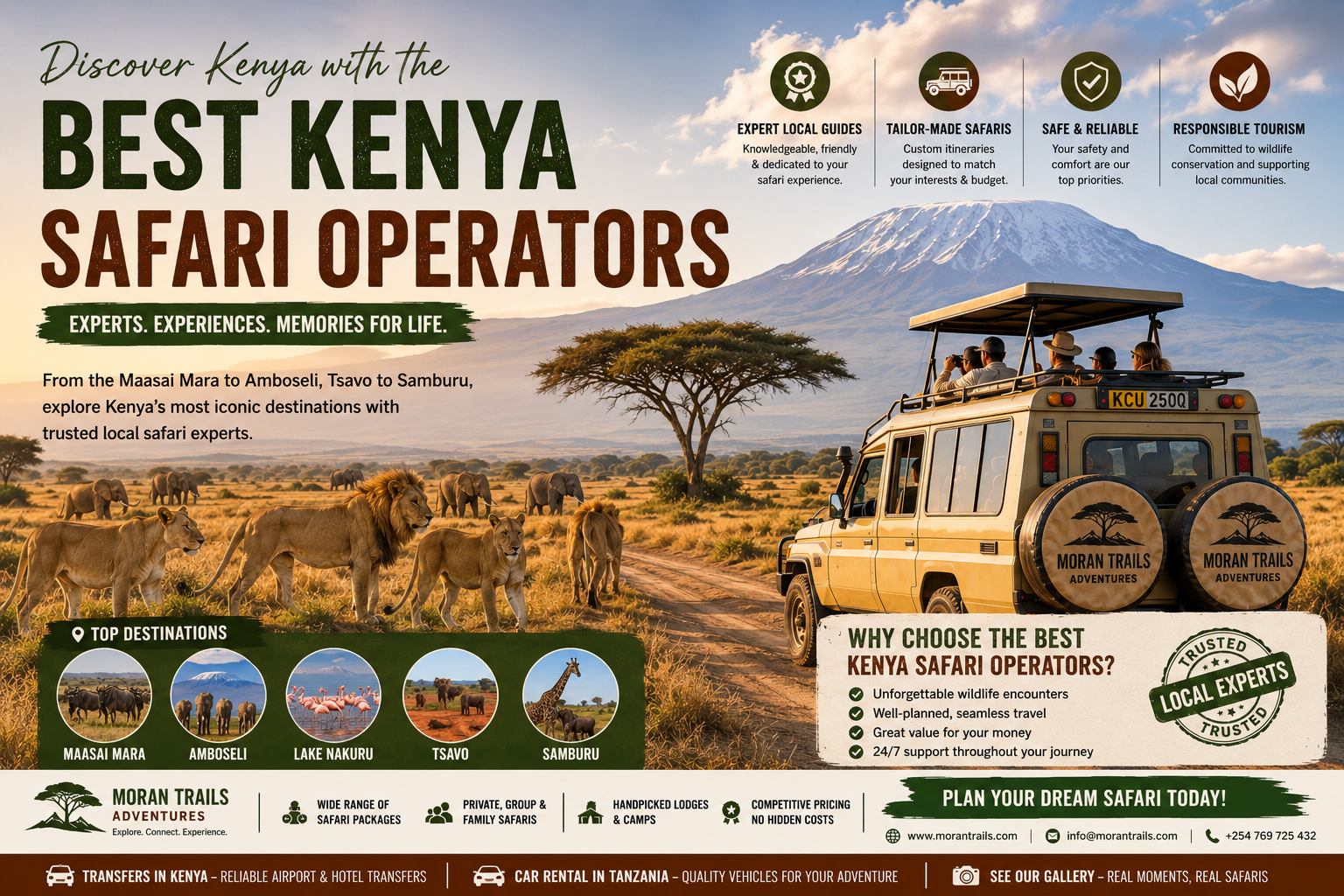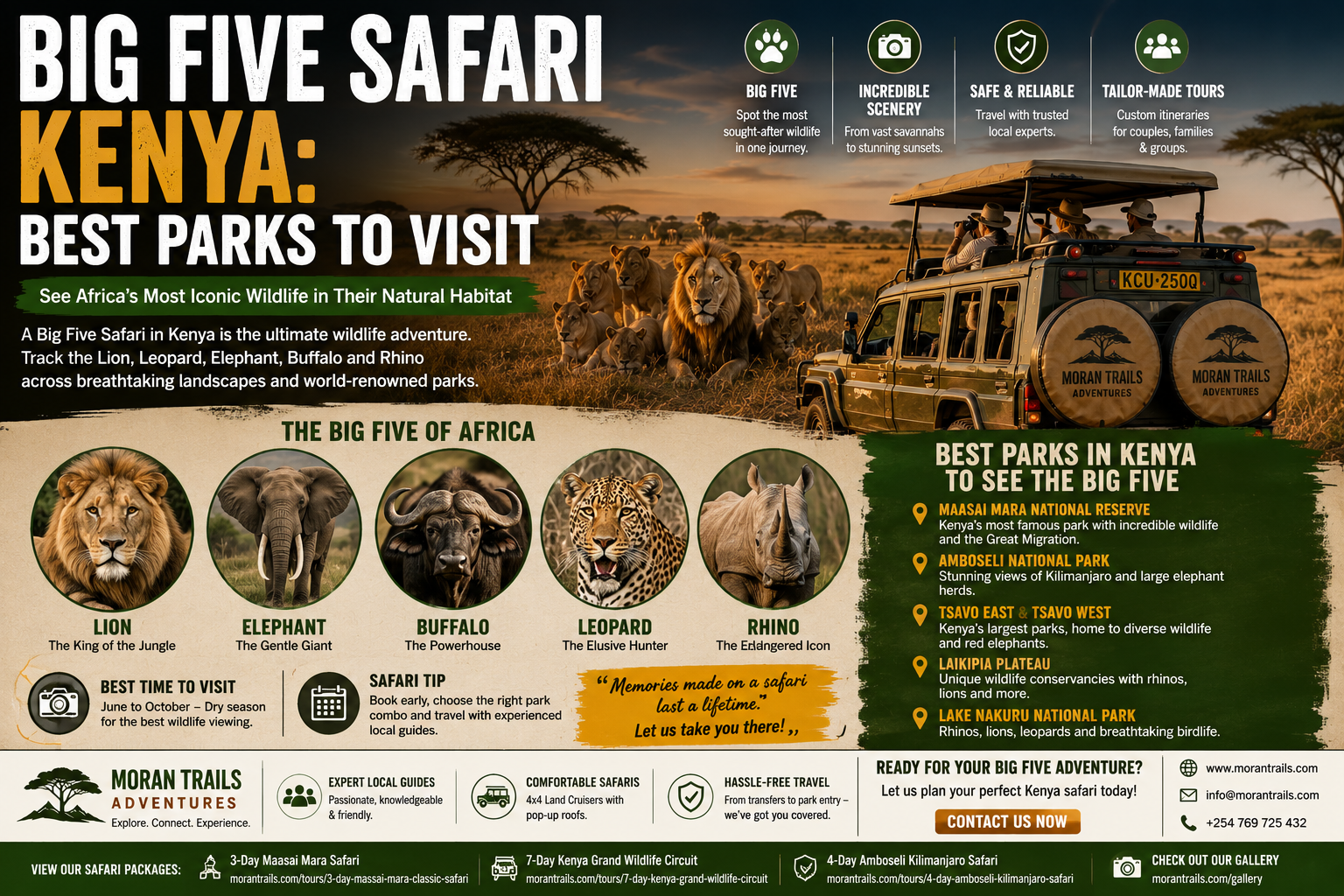
Big Five Safari Kenya: Best Parks to Visit sounds straightforward, but many travellers choose the wrong parks, expect guaranteed sightings, and overpay for weak itineraries. You need this guide because Kenya has several outstanding safari areas, yet not all of them offer the same chance of seeing lion, leopard, elephant, buffalo and rhino. The smartest trip is usually not about visiting the most famous park alone. It is about combining the right parks, the right season, and the right operator so your time and budget work harder for you. [1]
The real challenge behind a Big Five safari in Kenya
The first challenge is simple but expensive: no single Kenya park guarantees equally easy sightings of all five animals. SafariBookings’ Kenya specialists note that many parks hold at least four of the Big Five, but travellers improve their odds most by matching two or more destinations with complementary strengths. In other words, the best safari is usually a strategy, not a single pin on a map. [2]
The second challenge is that “Big Five” itself can mislead first-time visitors. The term refers to lion, leopard, elephant, buffalo and rhino. It came from old hunting language, not from any modern conservation ranking. Today, ethical safari travel is photographic, conservation-minded and far more nuanced than simply ticking animals off a list. That matters because a rushed checklist approach often leads people to ignore habitat, season, guide quality and animal welfare. [3]
There is also a practical route problem. The Maasai Mara is excellent for predators and all-round wildlife, but rhino are less predictable there than in specialised rhino areas. Lake Nakuru is superb for rhino, yet it has no elephants. Amboseli is iconic for elephants, but rhino are absent. Tsavo West has all five, but visibility can be harder because of cover and lower wildlife densities. Therefore, travellers who book without understanding these trade-offs often come home saying Kenya was beautiful but their Big Five plan was wrong. [4]
Finally, there is the operator problem. Kenya is a large safari market. SafariBookings currently lists thousands of Kenya tours from hundreds of operators, which means choice is plentiful but comparison is difficult. Good copy and good photos do not guarantee strong vehicles, realistic drive times, skilled guides or ethical wildlife practices. That is why a serious traveller needs a park-by-park guide and a booking framework, not just a pretty package page. [5]
Why Big Five Safari Kenya: Best Parks to Visit matters
A good Big Five Safari Kenya: Best Parks to Visit plan helps you make three decisions with confidence. First, it helps you decide whether you want the highest overall chance of seeing all five, the best-value route, or the most scenic and exclusive safari. Second, it helps you choose whether you should stay in one park or combine two or three areas. Third, it helps you avoid the common mistake of assuming that famous always means best for your exact goal. [1]
This matters because Kenya’s safari geography is wonderfully varied. The Maasai Mara page on Magical Kenya describes a vast grassland with the Big Five and the Great Migration. Ol Pejeta on Magical Kenya highlights exceptional black rhino conservation and specialised activities. Amboseli’s official destination page emphasises elephants, Kilimanjaro views and long-term elephant research. These are all outstanding wildlife areas, but they solve different traveller goals. [6]
A strong Big Five plan is also important because travel time shapes success. Safari specialists at SafariBookings advise against cramming too many parks into a short trip. More movement between lodges often means more hours in transit and fewer productive game drives. Therefore, a well-designed five- to seven-day safari can outperform a badly designed seven- to nine-day route that tries to do too much. [7]
There is a conservation reason too. Wildlife tourism can support conservation when it is well managed, but the benefits are not automatic. Research on wildlife tourism and conservation in Africa shows that good tourism planning can strengthen conservation outcomes. However, rhino research also shows that sensitive species can avoid tourist infrastructure if activity is poorly managed. In practice, this means your safari should be designed for respect as well as sightings. [8]
The best parks for a Big Five safari in Kenya
The best answer for most travellers is not one park but a shortlist. If you want the strongest overall Big Five safari in Kenya, start with Maasai Mara, Ol Pejeta and Lewa. If you want a wilder and less predictable but rewarding alternative, add Tsavo West or Meru. If you want strong rhino support around a classic route, use Lake Nakuru as a complement rather than as your sole Big Five destination. [9]
| Park or conservancy | Why it stands out | Big Five reality |
| Maasai Mara National Reserve | Kenya’s most famous all-round safari area, especially strong for predators and classic savannah wildlife | All five are present; lion, elephant, buffalo and leopard are strong draws, but rhino are less dependable inside the reserve than in specialist rhino areas. [10] |
| Ol Pejeta Conservancy | Excellent rhino conservation, easy access from Nairobi, strong activities and solid wildlife density | All five are present; black and white rhino are especially reliable, while leopard is possible but less certain. [11] |
| Lewa Wildlife Conservancy | Premium conservancy experience with strong conservation record and excellent rhino viewing | All five are present; rhino sightings are among the best in Kenya, with good chances for elephant and buffalo as well. [12] |
| Tsavo West National Park | Vast wilderness feel, volcanic scenery, Ngulia Rhino Sanctuary | All five are present, but sightings can be less predictable because wildlife densities are lower and vegetation is thicker. [13] |
| Meru National Park | Off-the-beaten-track beauty and fewer vehicles | Big Five potential exists, with rhinos protected in sanctuary areas, but big cats are less predictable than in the Mara. [2] |
| Lake Nakuru National Park | One of Kenya’s best rhino parks and an excellent add-on to a Mara route | Strong for rhino; lion and leopard are possible; there are no elephants, so it is not a full Big Five park. [14] |
| Amboseli National Park | Elephant specialist park with Kilimanjaro scenery and excellent photography | Superb for elephants and good for buffalo; lions and leopards are possible; rhino are absent. [15] |
Maasai Mara is still the best all-round first choice
For first-time safari visitors, Maasai Mara remains the strongest all-round recommendation. Magical Kenya states clearly that the reserve holds the Big Five and is best known for the Great Migration. SafariBookings goes further and describes it as Kenya’s flagship safari destination, strong for large carnivores throughout the year. That combination matters. If you want the best chance of seeing several Big Five species in one landscape, plus world-class game drive drama, the Mara should usually anchor your route. [16]
However, the Mara is not perfect for every goal. SafariBookings notes that black rhino are uncommon there and most likely in the Mara Triangle. Therefore, travellers whose dream animal is rhino should view the Mara as the core wildlife park, then add a rhino-strong destination instead of hoping for luck alone. That is exactly why the best Big Five itineraries often pair the Mara with Ol Pejeta, Lewa or Lake Nakuru. [17]
Ol Pejeta is the smartest rhino-led complement
Ol Pejeta is one of the most useful parks in the whole Kenya safari system because it solves the rhino problem so well. SafariBookings calls it the closest Big Five reserve to Nairobi and highlights that all five are present, with especially strong black and white rhino sightings. Magical Kenya adds that it is home to the largest population of critically endangered eastern black rhinos in the world, and it also promotes rhino tracking and conservation talks. For travellers who want conservation substance as well as sightings, that is a major strength. [11]
Ol Pejeta also works beautifully in practical terms. It can be done as a short trip from Nairobi, folded into a Laikipia circuit, or used as the rhino-heavy half of a Mara-and-Laikipia safari. If you are travelling with children, photographers or repeat safari-goers who want more than standard game drives, Ol Pejeta’s broader activity menu makes it even more valuable. [11]
Lewa is premium, purposeful and exceptionally strong
Lewa is often the best answer for travellers who want a smaller, more exclusive and conservation-led Big Five experience. SafariBookings describes it as one of the best places in Kenya to see the Big Five, with common black and white rhino sightings, strong predator presence, community engagement and excellent accommodation. In addition, Lewa offers activities such as walking, camel and horseback safaris, which can make a Kenya trip feel more layered than a standard vehicle-only route. [12]
The trade-off is price. Lewa tends to sit at the higher end of the market, and SafariBookings’ current examples are heavily skewed toward luxury. That does not make it bad value. On the contrary, for honeymoons, repeat travellers, conservation-minded guests and those who prioritise rhino or exclusivity, Lewa can be one of the best-value premium choices in Kenya. [12]
Tsavo West and Meru reward travellers who value space
Tsavo West deserves respect because it is genuinely Big Five country and home to the Ngulia Rhino Sanctuary. SafariBookings notes that all five are present, but also warns that wildlife densities are lower than in more popular parks and vegetation can make viewing unpredictable. In short, Tsavo West is a superb wilderness park, but it is not always the easiest first Big Five park for travellers who want quick, concentrated sightings. [13]
Meru offers a different kind of reward. SafariBookings presents it as an off-the-beaten-track park where elephant and buffalo are common, rhinos are protected in a sanctuary, and cat sightings can be excellent when luck is on your side. If you want fewer vehicles, scenic variety and a more exploratory feel, Meru can be brilliant. If you want the highest-probability first safari, Mara and Ol Pejeta usually remain easier choices. [2]
Supporting parks that strengthen a route
Lake Nakuru and Amboseli are often mis-sold as complete Big Five answers when, in truth, they are better used as specialists. Lake Nakuru is excellent for rhino and easy to combine with the Mara. Amboseli is one of Kenya’s most celebrated elephant parks and adds scenery that no northern circuit can match. Therefore, if your route already includes a Big Five core such as Maasai Mara or Ol Pejeta, these parks become powerful additions rather than compromises. [18]
Planning Big Five Safari Kenya: Best Parks to Visit
The smartest way to plan Big Five Safari Kenya: Best Parks to Visit is to choose one of three route models: classic, conservation-led or scenic circuit. The classic model is Maasai Mara plus Lake Nakuru or Ol Pejeta. The conservation-led model is Ol Pejeta plus Lewa or Ol Pejeta plus Maasai Mara. The scenic circuit model blends Maasai Mara, Lake Nakuru and Amboseli, giving you a broader Kenya experience even though Amboseli is not a rhino destination. [19]
A practical starting point is season. For the Maasai Mara, SafariBookings notes that the Great Migration is typically strongest from August to October, while the reserve remains rewarding year-round. For Ol Pejeta, the drier months from June to September, and also December to February, make wildlife tracking and roads easier. Lewa follows a similar pattern. Therefore, if you want the easiest general wildlife viewing, aim for the drier months. If you want migration energy as well, consider August to October. [20]
Price matters too. SafariBookings’ current Kenya pricing guidance suggests a five-day Kenyan safari starts around US$550 per person for budget camping, rises to around US$1,200 for a private mid-range lodge trip, and begins at roughly US$1,500 for luxury. For seven days, the starting point is around US$750 for shared camping, at least US$1,500 for a mid-range private safari, and around US$2,000-plus for luxury. Those are broad planning anchors, not fixed quotes, but they are useful for setting expectations. [21]
A typical park strategy looks like this:
- Three days: Maasai Mara if you want the highest short-trip reward.
- Four to five days: Maasai Mara plus Lake Nakuru, or Ol Pejeta plus another rhino/predator area.
- Six to seven days: Maasai Mara, Lake Nakuru and Amboseli, or Maasai Mara with Ol Pejeta and Laikipia.
- Premium route: Lewa plus Maasai Mara, often with internal flights. [22]
If you want a quick, proven route, Moran Trails already has a 3-Day Maasai Mara Classic Safari for a focused first-timer option, and a broader 7-Day Kenya Grand Wildlife Circuit if you want a multi-park journey. Travellers who also want elephant-heavy scenery can compare the 4-Day Amboseli & Kilimanjaro Safari, which is not a full Big Five product on its own but works well as part of a wider Kenya plan. You can see the wider safari portfolio on the Moran Trails Adventures website.
Choosing the best safari service and operator
A good operator is not just someone who drives you between gates. The best service solves the three biggest safari pain points: route design, logistical friction and trust. That means clear pricing, a realistic pace, an experienced guide, suitable vehicles, responsive communication and strong destination knowledge. It also means honesty. A trustworthy operator tells you that leopard are never guaranteed, that rhino are easier in some parks than others, and that a cheaper safari can become poor value if it rushes the trip. [23]
This is where local, specialist support becomes useful. Moran Trails can help travellers match the right park mix to the right budget. If your priority is a short flagship safari, the Maasai Mara route is a natural start. If your dream is a deeper circuit, the longer Kenya itinerary makes more sense. If you are arriving late, moving between city hotels and parks, or coordinating a family group, reliable Kenya transfers remove a surprising amount of stress. If your East Africa trip extends south after Kenya, the same team can also help with Tanzania car rental.
The process should feel simple:
- Share your dates, group size and wildlife priorities.
- Decide whether you want a short Mara focus or a multi-park circuit.
- Confirm road versus fly-in preferences.
- Compare accommodation level, vehicle type and included fees.
- Review independent feedback before paying a deposit.
Independent trust signals matter. Before booking, look at Moran Trails’ public feedback on Tripadvisor and its operator profile on SafariBookings. Then browse the company’s gallery to see the style of trips it actually runs. That combination of direct communication, third-party review platforms and real visual proof is more useful than relying on a polished homepage alone.
When comparing operators, ask six questions before you commit:
- Which parks give me the best realistic chance of seeing all five?
- How many full game drives are included?
- Which vehicle will we use, and how many guests share it?
- Are park fees included?
- How much time is spent in transit versus inside wildlife areas?
- What wildlife and community standards do your guides follow?
The right company should answer clearly, not defensively. If you want a tailored recommendation instead of guesswork, use the contact page and ask for a route based on your must-see species, travel dates and budget.
Ethical considerations for a Big Five safari in Kenya
Ethics are not a luxury topic in Kenya. They are central to whether your money supports the future of wildlife and the people who live alongside it. Research from the Maasai Mara shows that positive local attitudes towards predators are linked to benefits, conservancy membership and a sense of community ownership. Research from the Amboseli–Tsavo ecosystem also shows that tourism-linked compensation schemes can help reduce retaliatory killing of lions after livestock losses. In practical terms, ethical tourism works best when local people are visibly part of the value chain. [24]
However, ethical safari marketing should not be naïve. Recent research on community-based conserved areas warns that better-paying tourism and conservation jobs can be captured by outsiders, while local inequalities persist. That means travellers should favour operators and properties that are transparent about community partnership, local employment and fair benefit-sharing rather than using vague phrases about “giving back”. [25]
Wildlife ethics matter just as much. Rhino research published in Oryx found that black rhinos can avoid tourist infrastructure and activity in ways that affect both welfare and long-term conservation management. Therefore, a good guide should never pressure wildlife, chase animals for photographs or crowd rhino sightings with impatient vehicle behaviour. The best Big Five safari is not the one with the closest vehicle angle. It is the one that leaves the least harmful footprint while still giving you unforgettable sightings. [26]
For travellers, the ethical checklist is straightforward. Choose operators that explain route logic honestly. Do not demand invasive animal approaches. Treat cultural visits as real exchanges, not performances for your camera. Ask how your safari supports local jobs. Accept that conservation-minded travel sometimes means seeing less, but seeing it better. That mind-set generally produces a richer safari anyway. [27]
FAQs about Big Five Safari Kenya: Best Parks to Visit
Is Maasai Mara enough for a full Big Five safari in Kenya?
It can be enough if you are lucky, and it is the best single-park starting point for most first-time visitors. However, black rhino are less dependable there than in specialist rhino destinations. If seeing all five matters strongly, add Ol Pejeta, Lewa or Lake Nakuru. [28]
Which Kenya park is best for rhino?
Ol Pejeta is one of the strongest rhino answers because of its eastern black rhino population and all-round wildlife appeal. Lewa is also excellent, especially for premium travellers. Lake Nakuru is superb for rhino too, but it is not a complete Big Five park because elephants are absent. [29]
What is the best short itinerary for Big Five sightings?
For three days, choose Maasai Mara. For four to five days, choose Maasai Mara plus Lake Nakuru or Ol Pejeta. For six to seven days, combine Maasai Mara with a rhino-focused stop and, if desired, a scenic extension such as Amboseli. [22]
What is the best time for a Big Five safari in Kenya?
Dry months usually make wildlife viewing easier. In the Mara, August to October adds migration drama. In Ol Pejeta and Lewa, June to September is particularly strong, with December to February also good. [20]
Can I do a Big Five safari from Nairobi without wasting time?
Yes, but route choice matters. Ol Pejeta is the closest Big Five reserve to Nairobi, while Nairobi National Park offers four of the Big Five but no elephants. Maasai Mara is still the stronger classic safari, though it needs more travel time. [30]
How do I know if an operator is trustworthy?
Read third-party reviews, confirm inclusions in writing, ask park-specific questions, and check whether the operator explains limitations honestly. For Moran Trails, a sensible due-diligence path is to review its Tripadvisor page, compare its SafariBookings operator profile, and then ask for a tailored quote through the contact page.
Final call to action
The best Big Five Safari Kenya: Best Parks to Visit plan is not about chasing the loudest marketing promise. It is about matching the right parks to the right species, the right season and the right style of travel. For most first-time visitors, Maasai Mara remains the strongest anchor. For rhino, Ol Pejeta and Lewa are outstanding. For wilderness depth, Tsavo West and Meru reward patience. For a balanced classic circuit, Lake Nakuru and Amboseli can elevate the trip when used intelligently. [31]
If you want a safari that feels clear, ethical and properly designed, start with a local specialist rather than stitching together random park pages. Explore current options on Moran Trails Adventures, compare the 3-Day Maasai Mara Classic Safari, the 7-Day Kenya Grand Wildlife Circuit, and the 4-Day Amboseli & Kilimanjaro Safari. Then check independent public feedback on Tripadvisor and SafariBookings, and use the contact form to request a route built around your dates, budget and must-see species. The best Kenya safari is the one planned with real knowledge before the wheels start rolling.
[1] [2] [3] [17] [19] [20] [22] Best Places to See the Big Five Animals in Kenya – SafariBookings
https://www.safaribookings.com/blog/best-places-to-see-the-big-five-animals-in-kenya
[4] [6] [9] [10] [16] [28] [31] Maasai Mara - Magical Kenya
https://magicalkenya.com/maasai-mara/
[5] Kenya Safari - Compare 3863 Tours - SafariBookings
https://www.safaribookings.com/tours/kenya?utm_source=chatgpt.com
[7] [23] 7-Day Kenya Safari - Compare 453 Tours
https://www.safaribookings.com/tours/kenya/7-day
[8] [27] Enhancing nature-based tourism to improve wildlife ...
https://link.springer.com/article/10.1007/s43621-025-02064-1?utm_source=chatgpt.com
[11] [30] Ol Pejeta Conservancy – Travel Guide, Map & More!
https://www.safaribookings.com/ol-pejeta
[12] Lewa Wildlife Conservancy – Travel Guide, Map & More!
https://www.safaribookings.com/lewa
[13] Tsavo West National Park – Travel Guide, Map & More!
https://www.safaribookings.com/tsavo-west
[14] [18] Lake Nakuru National Park – Travel Guide, Map & More!
https://www.safaribookings.com/nakuru
[15] Amboseli National Park - Magical Kenya
https://magicalkenya.com/experience/amboseli-national-park/
[21] 5-Day Kenya Safaris (497 Tours by 192 Tour Operators)
https://www.safaribookings.com/tours/kenya/5-day
[24] Human–wildlife coexistence: attitudes and behavioural ...
[25] Community-based conserved areas in advancing sustainable ...
https://link.springer.com/article/10.1007/s44353-025-00047-x?utm_source=chatgpt.com
[26] Black rhinoceros avoidance of tourist infrastructure and ...
[29] Ol Pejeta Conservancy - Magical Kenya