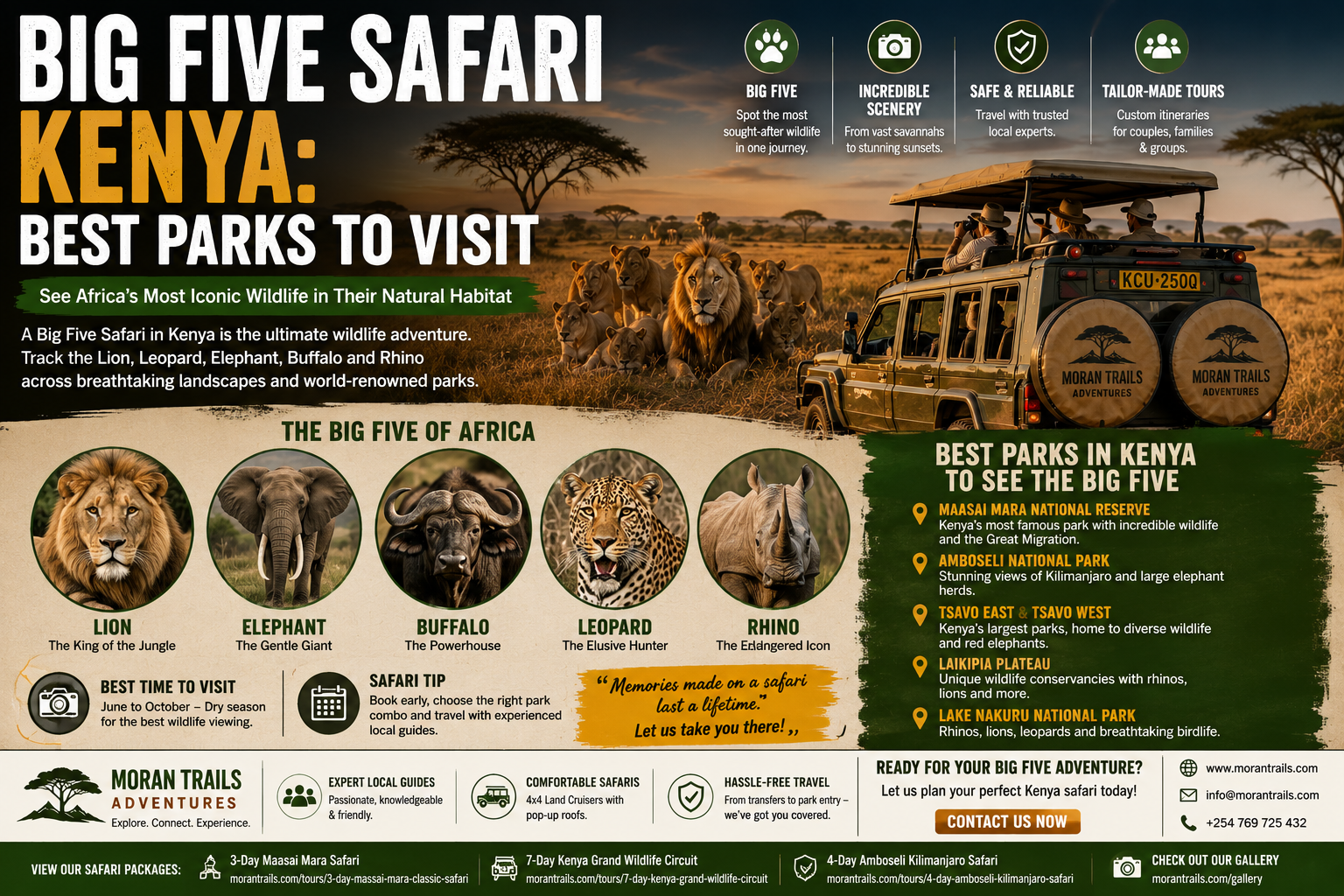
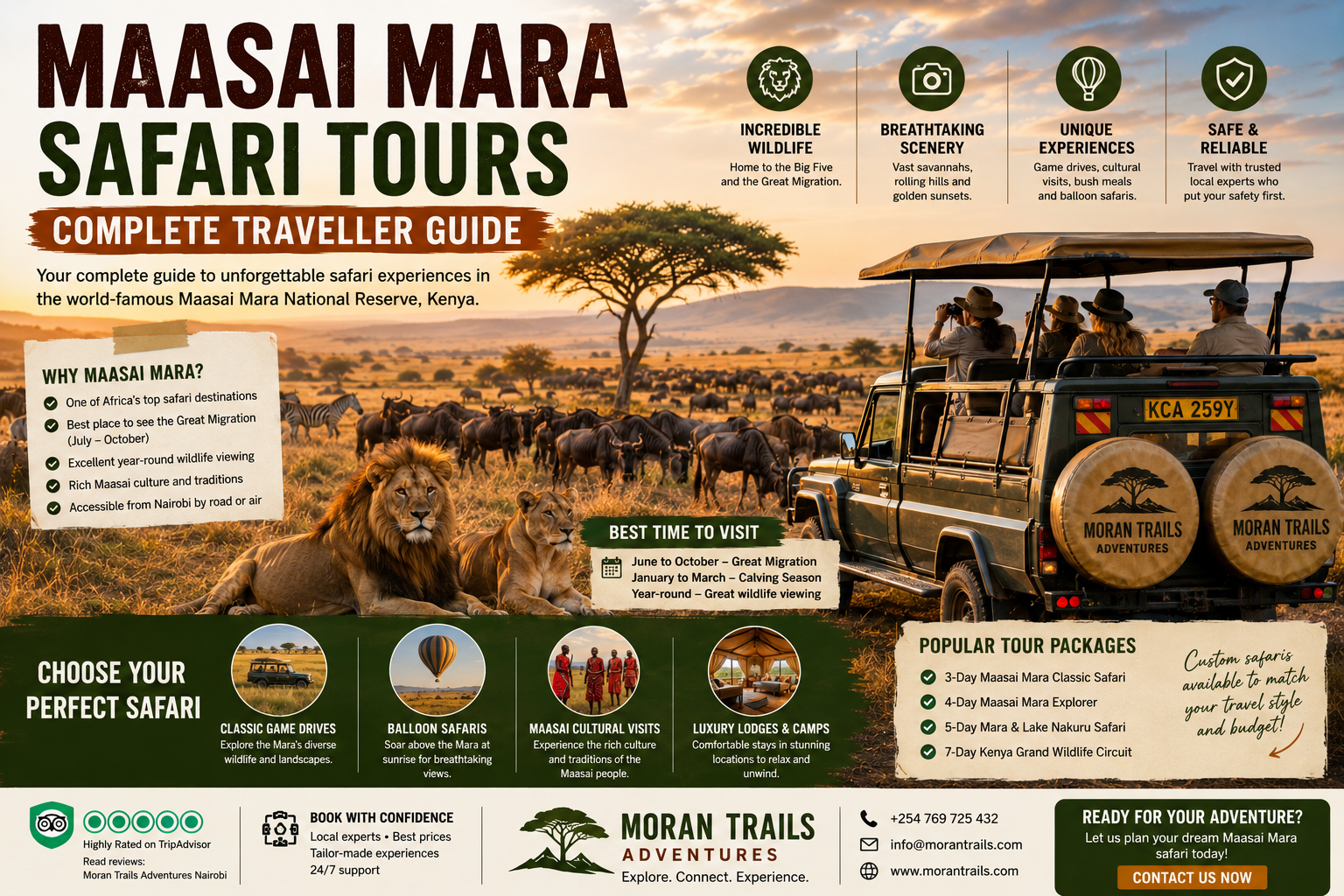
Mount Kilimanjaro safari planning often goes wrong because travellers buy a beautiful promise, not a well-built itinerary. They see one perfect image of elephants under a snow-capped peak, assume every safari delivers that moment, and only later discover the real variables: cloud cover, transfer times, vehicle quality, guide skill, hidden costs, conservation ethics, and whether the trip is actually designed around the best viewing windows. This article solves that problem by showing you what a genuine Mount Kilimanjaro safari should include, how to compare operators, and why a properly planned Kenya safari around Amboseli can deliver far more than a rushed, generic package. [1]
Why travellers search for a Mount Kilimanjaro safari
In practice, many people searching for a Mount Kilimanjaro safari are not looking for a summit trek. They are usually looking for a wildlife safari with dramatic views of Kilimanjaro, most famously from Kenya’s Amboseli ecosystem and nearby southern circuits. That is an inference from official tourism pages and current itineraries: Magical Kenya, Kenya Wildlife Service, and current Amboseli-focused safari products all frame the experience around elephants, open plains, wetlands, and the mountain backdrop rather than climbing logistics. [2]
That framing makes sense. Amboseli lies close to the Tanzanian border, is widely promoted for close encounters with large elephant herds, and is one of Kenya’s signature parks for mountain-backed wildlife photography. Magical Kenya highlights Amboseli’s proximity to Kilimanjaro, its elephant reputation, and its mosaic of dried lakebed, wetlands, savannah, and woodland habitats. Kenya Wildlife Service likewise positions the park as one of Africa’s premier destinations for large elephant encounters. SafariBookings adds that Amboseli is relatively compact, at about 390 km², which helps first-time visitors cover the park efficiently. [3]
That is why this article is grounded in authority sources rather than generic travel blogs. The core destination guidance comes from Magical Kenya’s Amboseli overview, the Kenya Wildlife Service park page, and SafariBookings’ Amboseli guide. For research depth, it also draws on peer-reviewed work on the long-running Amboseli elephant population study in the Journal of Zoology, recent conservation analysis in Frontiers in Conservation Science, and current work on wildlife-based tourism and community benefit distribution in East Africa. [4]
The strongest reason to care about a Mount Kilimanjaro safari is that it compresses several dream outcomes into one destination. You get one of Africa’s most recognisable landscapes, unusually reliable elephant viewing, relatively simple road access from Nairobi, and the option to extend into Tsavo, Maasai Mara, or northern Tanzania without rebuilding your whole trip from scratch. Magical Kenya’s southern circuit pages and current itinerary listings show how often Kilimanjaro views are paired with broader Kenya safari planning for exactly this reason. [5]
Why a Mount Kilimanjaro safari is hard to book well
The first challenge is expectation mismatch. Travellers often assume Kilimanjaro is visible all day because that is how destination photography is marketed. In reality, SafariBookings notes that the mountain is frequently obscured by cloud and that the clearest panoramas are usually in the early morning and late afternoon. It also notes that drier months, especially June to October and January to February, are strong periods for wildlife viewing, while clearer post-rain skies can sometimes improve visual quality when dust is low. In short, timing matters more than many first-time visitors realise. [6]
The second challenge is itinerary design. A real Mount Kilimanjaro safari is not just “Nairobi to Amboseli and back”. It should be built around viewing windows, rest, road time, photography conditions, and habitat strategy. Current Amboseli itineraries from Moran Trails make this explicit by planning pre-dawn or sunrise departures, targeting elephant-rich swamp zones, and tying the strongest Kilimanjaro moments to early starts rather than vague all-day expectations. When operators do not explain those details, travellers can pay for the right destination but the wrong execution. [7]
The third challenge is choosing between a short showcase safari and a more rounded circuit. A short trip can be enough if you only want elephants and the mountain. However, travellers who want a broader first-time Kenya experience often need more than one park. Moran Trails currently presents its 4-day Amboseli & Kilimanjaro safari as a focused mountain-and-elephant itinerary, while its 7-day Kenya Grand Wildlife Circuit extends into other ecosystems such as Ol Pejeta, Lake Nakuru, Lake Naivasha, and the Maasai Mara. That difference matters because travellers often compare prices without comparing goals. [8]
The fourth challenge is trust. Reviews alone are not enough, but no serious traveller should ignore them. Independent review platforms can help verify whether an operator communicates clearly, runs on time, provides knowledgeable guides, and handles real-world issues well. Moran Trails currently has an active SafariBookings company profile and a live Tripadvisor reviews page, which gives prospective clients a second layer of validation beyond the company’s own site. [9]
The fifth challenge is ethical reality. Amboseli sits within a living conservation landscape, not a closed cinematic set. Peer-reviewed work on Kenya’s conservancies shows that wildlife movement, community land use, and tourism economics are interconnected, while newer research on wildlife-based tourism shows that local support is stronger when benefits are tangible and fairly distributed. That means the “best” Mount Kilimanjaro safari is not simply the cheapest or most luxurious product. It is the one that combines guest value with responsible guiding, wildlife respect, and meaningful local benefit. [10]
What a strong Mount Kilimanjaro safari should include
A strong Mount Kilimanjaro safari starts with the right landscape. Official destination pages repeatedly point travellers towards Amboseli because it combines large elephant herds, relatively open visibility, and direct mountain drama. Magical Kenya notes the park’s multiple habitat types and accommodation range, while KWS and KWS-linked reservation pages emphasise that Amboseli is one of the best places in Africa to see elephants up close with Kilimanjaro in the background. That combination is the essence of the product. [11]
It also needs the right wildlife logic. Amboseli’s elephant reputation is not just marketing. Magical Kenya refers to the park’s long-term elephant research and conservation profile, and the landmark Amboseli elephant study published in the Journal of Zoology reports data derived from the histories of 1,778 individually known elephants studied from 1972 onward. That long research base is one reason Amboseli is so important for visitors who want both spectacle and substance. You are not simply seeing elephants; you are visiting one of Africa’s most extensively studied elephant landscapes. [12]
A serious Mount Kilimanjaro safari should also include realistic logistics. The current Moran Trails Amboseli product describes road transfers from Nairobi, three nights of full-board accommodation, a private 4x4 pop-top safari vehicle, included park fees for Amboseli and Tsavo West, and an expert KPSGA-certified guide. Those details matter because they affect comfort, timing, comfort between drives, and the quality of wildlife interpretation once you are in the field. The page also makes clear that alcohol, gratuities, travel insurance, and optional extras sit outside the included base. That kind of transparency is what travellers should look for from any operator. [13]
Another essential ingredient is route flexibility. The best Mount Kilimanjaro safari is not always a one-park holiday. Some travellers only want the iconic mountain-and-elephant frame. Others want to pair it with Tsavo’s lava landscapes, the Mara’s predator density, or wider East African overland planning. Moran Trails’ published itineraries make those distinctions fairly clear, from the focused mountain experience in Amboseli to Mara-specific wildlife emphasis and a fuller multi-park circuit. That makes it easier to match product to intent instead of forcing one itinerary onto every traveller. [14]
The comparison below is useful if you are trying to decide which shape of safari best fits your needs. It synthesises route intent, inclusions, and planning logic from the current Moran Trails itinerary pages. [15]
| Best fit | Recommended route | Why it works |
| Traveller focused on elephants and mountain photography | 4-day Amboseli & Kilimanjaro safari | Built around dawn viewing, Amboseli swamps, Kilimanjaro photography, and a Tsavo West extension |
| First-time visitor wanting a wider Kenya overview | 7-day Kenya Grand Wildlife Circuit | Adds Ol Pejeta, Nakuru, Naivasha, and the Mara for a broader wildlife portfolio |
| Traveller mainly interested in predators and classic savannah drama | 3-day Maasai Mara Classic Safari | Prioritises Mara big-game viewing, especially big cats and open-plain game drives |
Finally, a good Mount Kilimanjaro safari should make practical planning easy before you ever reach the park. That includes airport assistance, road transfer planning, pre-trip communication, and clear visual proof of what the company actually sells. Moran Trails currently presents these support layers through its main Moran Trails Adventures website, its Kenya transfer services, its Tanzania car rental page for cross-border or onward logistics, and its gallery of safari images, which includes Amboseli/Kilimanjaro visuals alongside other Kenya safari scenes. [16]
How to choose the best operator and itinerary
The simplest way to choose the right operator is to work backwards from your real goal. If your goal is the classic elephant silhouette under Kilimanjaro, then operator questions should be photo-specific and timing-specific. Ask when the game drives start, whether the mountain-view windows are built into the itinerary, whether the safari is private or shared, what vehicle type is used, and whether the property is positioned for fast morning access. Current Amboseli itinerary content from SafariBookings and Moran Trails supports the same basic lesson: early starts dramatically improve your odds of getting the moment you came for. [17]
A strong selection process for a Mount Kilimanjaro safari should include these checks:
- Transparency of inclusions: park fees, meals, transport, bottled water, guide standard, and accommodation level should be listed clearly. [18]
- Guide quality: look for qualified naturalist or KPSGA-certified guiding where possible, especially if wildlife interpretation matters to you. [19]
- Independent proof: use review platforms such as Tripadvisor and SafariBookings, not just a company’s own site. [9]
- Ethical posture: ask whether cultural visits are optional, how wildlife-viewing distance is handled, and whether the operator explains conservation expectations. Peer-reviewed research shows that community support for wildlife tourism depends heavily on fair benefit distribution and local inclusion. [20]
- Flexibility: airport pickups, route extensions, and bespoke adjustments save time and reduce friction, especially for international arrivals. [21]
The booking process itself should also be simple and humane. You should be able to explain your dates, budget, rooming needs, and travel style, then receive a clear itinerary with inclusions, exclusions, and payment terms. Moran Trails presents that bespoke process directly on its homepage, describing tailored itineraries and end-to-end service from airport pickup to airport drop-off, and its contact page provides direct phone, email, WhatsApp, and office details in Nairobi. [21]
If you want a practical planning sequence, this is the right order for a Mount Kilimanjaro safari:
- Decide whether you want a focused Amboseli safari or a broader Kenya circuit.
- Choose your preferred travel season around viewing goals, budget, and crowd tolerance.
- Shortlist only operators with transparent inclusions and reputable independent reviews.
- Confirm vehicle type, private versus shared format, and guide credentials.
- Check transfer arrangements before and after the safari.
- Use existing product pages and galleries to verify whether the experience matches your expectations.
- Only then make the booking. [22]
Ethics should sit inside that process, not outside it. Research on Kenya’s conservation landscape shows how dependent wildlife persistence is on connectivity, community-managed or privately managed conservation space, and workable incentives. Research on wildlife-based tourism in nearby Tanzania shows that conservation tourism delivers the best long-term outcomes when residents perceive the benefits as real and fair. Therefore, the best operator is not just the one with the slickest copy. It is the one whose planning supports good wildlife conduct, realistic expectations, and respectful engagement with the wider ecosystem. [10]
FAQs about Mount Kilimanjaro safari
Is a Mount Kilimanjaro safari the same as climbing Kilimanjaro?
Usually, no. In search intent and travel marketing, a Mount Kilimanjaro safari usually refers to a wildlife safari with views of the mountain, especially from Amboseli in Kenya or northern Tanzania. Climbing Kilimanjaro is a separate trek product with very different logistics. This distinction is an inference from official Amboseli destination pages and current Kilimanjaro-view itineraries, which focus on elephants, wetlands, scenic drives, and dawn mountain views rather than summit routes. [23]
When is the best time to book a Mount Kilimanjaro safari?
For wildlife, SafariBookings recommends the dry months of June to October and January to February. For the mountain itself, the best panoramas are usually early morning and late afternoon, while some wetter months can produce cleaner skies because there is less dust. That means your best timing depends on whether you care more about game viewing density, photography clarity, or fewer crowds. [6]
How many days do I need?
For most travellers, three to four days is the minimum sweet spot for a satisfying Mount Kilimanjaro safari. That gives you more than one shot at good visibility and enough time for unhurried game drives. Current Amboseli itineraries from SafariBookings and Moran Trails consistently frame two- to four-day trips as the practical length for this kind of safari, with four days offering a better balance of photography, elephant viewing, and route depth. [24]
Will I definitely see Kilimanjaro?
No ethical operator should promise that. Kilimanjaro is often covered by cloud for part of the day, which is why early starts matter so much. What a good operator can do is improve your chances by building the itinerary around the best light and visibility windows rather than wasting those hours on transfers or late departures. [25]
Why is Amboseli so important to this experience?
Because Amboseli combines access, elephants, openness, and mountain drama unusually well. Official Kenya tourism pages and KWS material repeatedly describe it as one of the country’s signature elephant landscapes, while peer-reviewed elephant work confirms the park’s unusual long-term research importance. Few East African safari products deliver that mix as efficiently. [26]
How can I verify an operator before booking?
Start with the operator’s own itinerary pages, then check independent review platforms and direct communication quality. For Moran Trails, that means comparing the company’s main site and route pages with its Tripadvisor reviews, SafariBookings profile, and direct contact details on the contact page. If the operator answers clearly on start times, inclusions, and guiding, that is a good signal. [27]
Plan your Mount Kilimanjaro safari with confidence
A premium Mount Kilimanjaro safari is not about buying a dream image and hoping it comes true. It is about aligning destination choice, season, morning access, vehicle quality, guiding, ethics, and review-backed trust. Official Kenya tourism sources show why Amboseli has become the flagship setting for this trip, and peer-reviewed research helps explain why the landscape matters beyond photography alone. When you understand those ingredients, you stop shopping for vague “safari deals” and start choosing a safari that is actually built to deliver what you came for. [28]
If you want that experience designed properly, begin with a route that matches your intent. Explore the focused 4-day Amboseli & Kilimanjaro safari if the mountain-and-elephant image is your priority. Compare it with the broader 7-day Kenya Grand Wildlife Circuit if you want a more complete first safari, or pair it with the 3-day Maasai Mara Classic Safari if you also want classic predator country. Review the operator on Tripadvisor and SafariBookings, browse the Moran Trails Adventures homepage, look through the gallery, and use the Kenya transfer services or Tanzania car rental options if your itinerary stretches across the region. Then finish the process the right way by contacting the team directly with your dates, group size, budget, and travel goals. [29]
That is the difference between a generic safari booking and a professionally planned Mount Kilimanjaro safari: fewer surprises, better timing, stronger ethics, clearer value, and a much better chance that the moment you imagined is waiting for you when the light breaks over Amboseli. [30]
[1] [2] [3] [11] [12] [23] [26] [28] Amboseli National Park
https://magicalkenya.com/experience/amboseli-national-park/?utm_source=chatgpt.com
[4] The demography of an African elephant (Loxodonta africana) population in Amboseli, Kenya | Journal of Zoology | Cambridge Core
[5] Southern – Online Tourist Information Centre
https://tic.magicalkenya.com/circuit/southern/?utm_source=chatgpt.com
[6] [17] [22] [25] [30] Best Time To Visit Amboseli (Month by Month)
https://www.safaribookings.com/amboseli/best-time?utm_source=chatgpt.com
[7] [8] [13] [14] [15] [18] [19] [29] Moran Trails | Where Every Trail Tells a Story
https://morantrails.com/tours/4-day-amboseli-kilimanjaro-safari
[9] Reviews of Moran Trails Adventures (Kenya)
https://www.safaribookings.com/p5109
[10] Frontiers | Winning space for conservation: the growth of wildlife conservancies in Kenya
https://www.frontiersin.org/journals/conservation-science/articles/10.3389/fcosc.2024.1385959/full
[16] [21] [27] Moran Trails | Where Every Trail Tells a Story
[20] Frontiers | Community perspectives on wildlife-based tourism benefits at three wildlife management areas in northern Tanzania
https://www.frontiersin.org/journals/sustainable-tourism/articles/10.3389/frsut.2026.1740699/full
[24] Amboseli National Park
https://kws.go.ke/wp-content/uploads/2026/02/Amboseli-National-Park.pdf?utm_source=chatgpt.com